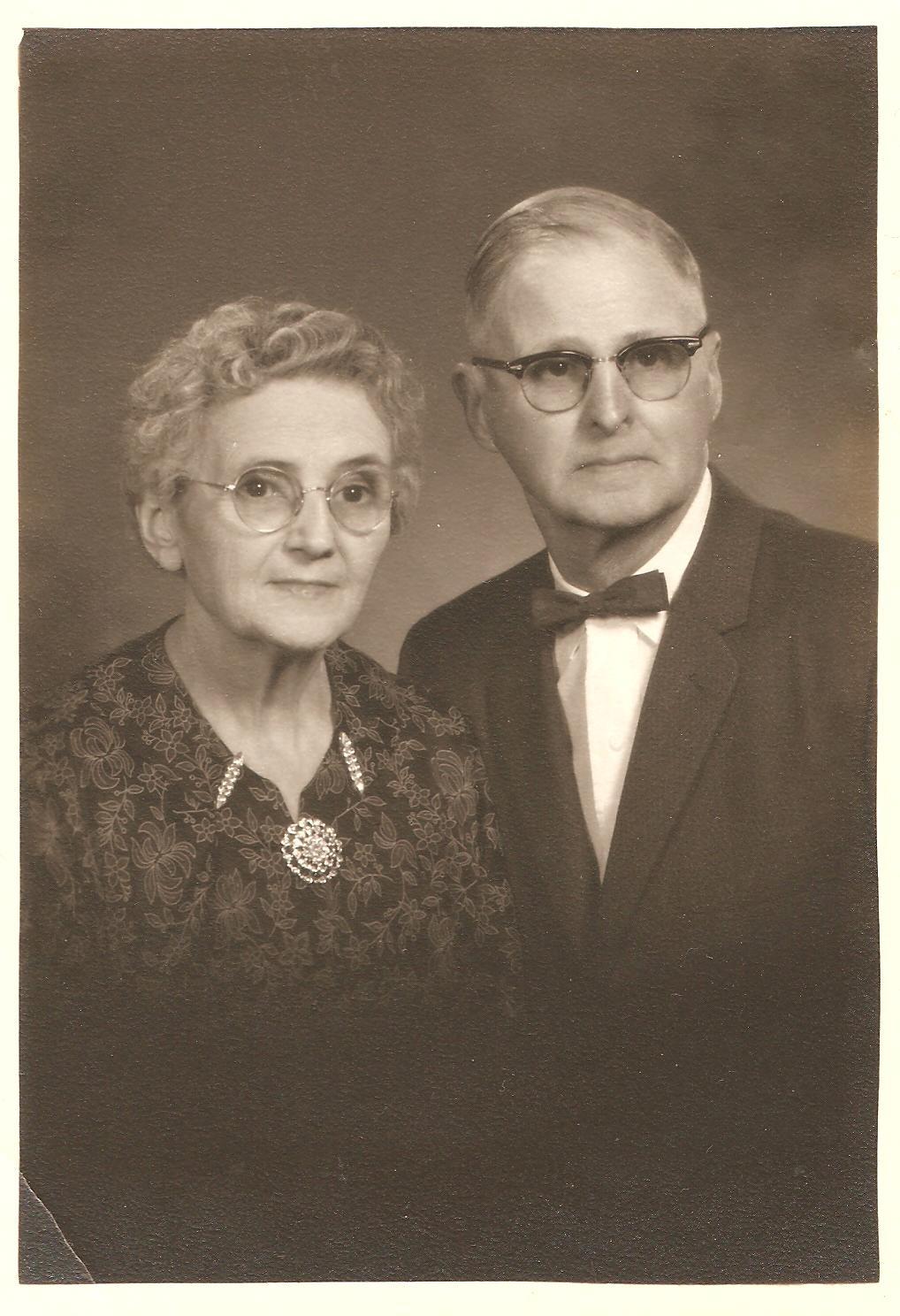
Elmer Edward & Edna Ester Auxier
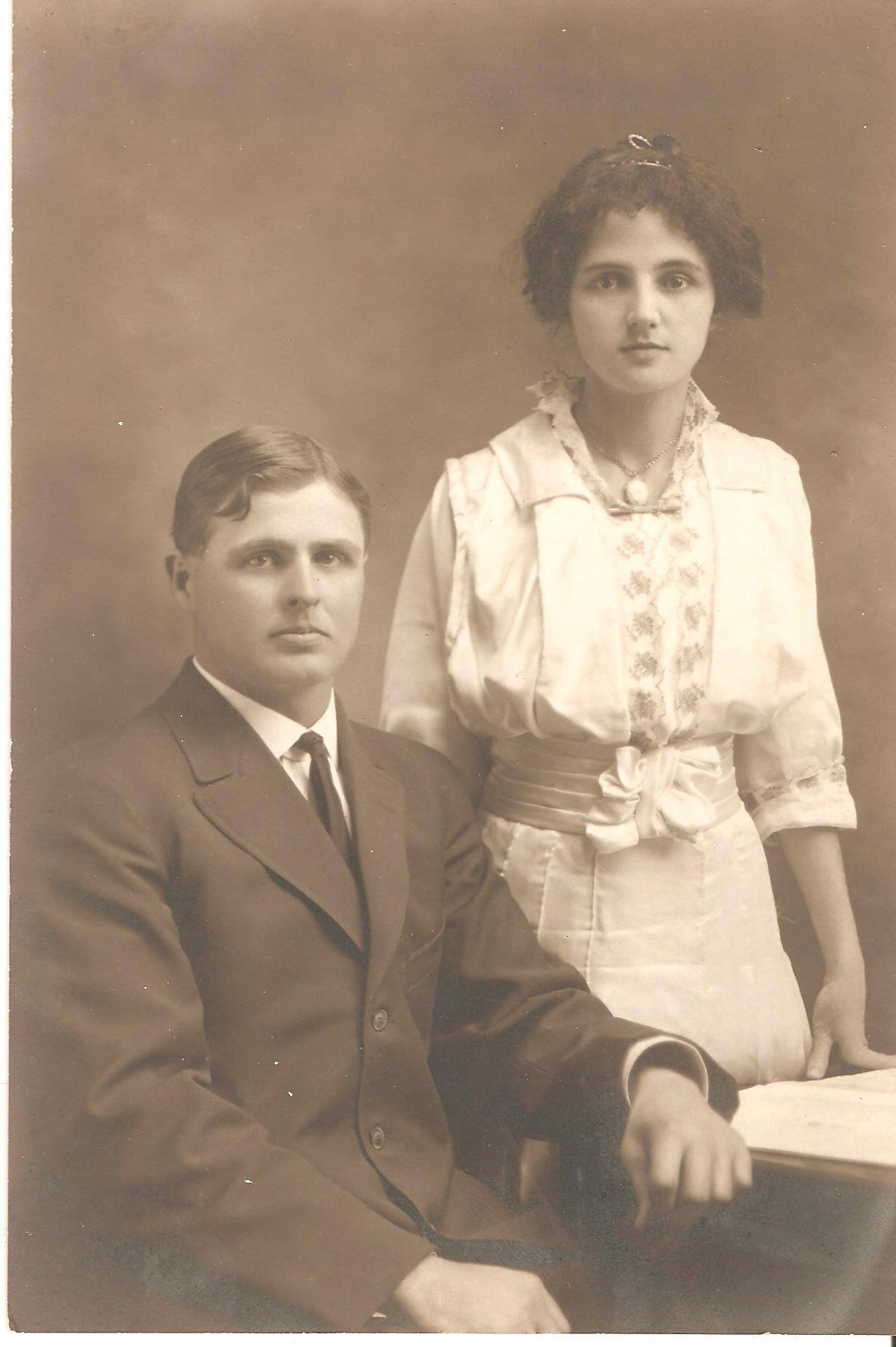
1. Elmer’s Early Roots
Elmer Edward Auxier was born in 1889 in Verdon, Nebraska. He was the son of Nathaniel Douglas “Red” Auxier and Pheribe Pritchard, both part of the early wave of settlers who turned open prairie into working farms.
Elmer grew up in a household where land and work were the center of daily life. His father, Nathaniel Douglas Auxier, had lost both parents by age of 5 and was raised by his siblings. He migrated from Kentucky to Nebraska at the age of 20 in 1881 at or near the same time as his brother Edward Everett. Nathaniel bought, improved, and farmed several tracts of land a few miles north of Verdon (in the Liberty and Ohio precincts of Richardson County), and also served in public roles such as county commissioner. Elmer would later farm the south forty acres of his father's land. In that setting, Elmer learned the habits of responsibility, thrift, and community involvement that would later shape his own home with Edna.
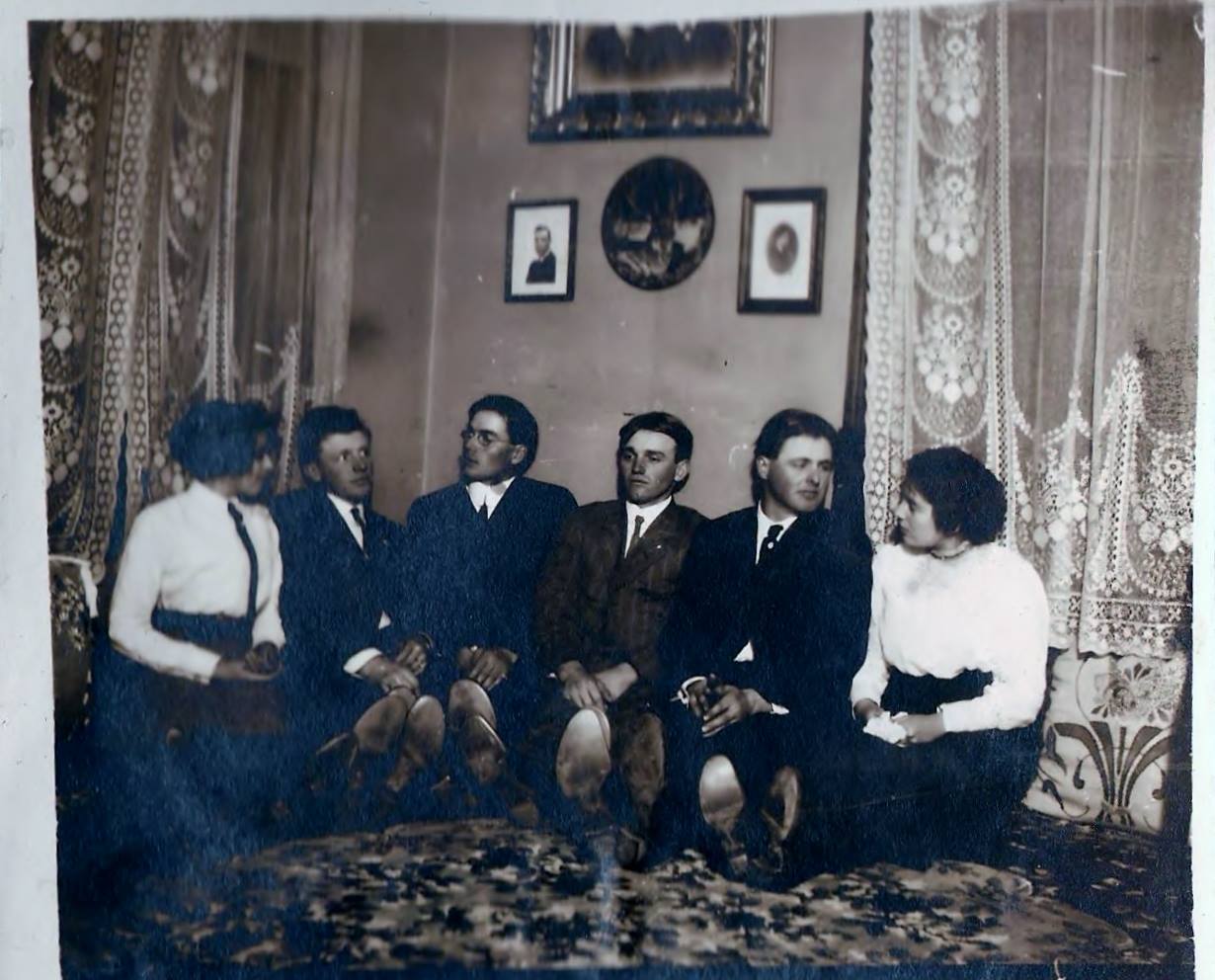
2. Elmer & Edna Marry and Build a Family
In 1915 (Jan 6), Elmer married Edna Ester Griffiths in the Verdon home of the bride's parents. Together they began the quiet, steady work of building a household rooted in faith, discipline, and care for their children.
They would eventually become the parents of John Nathaniel Auxier (known as Grandpa Johnny to his great grandchildren) and Alice Elizabeth Auxier.
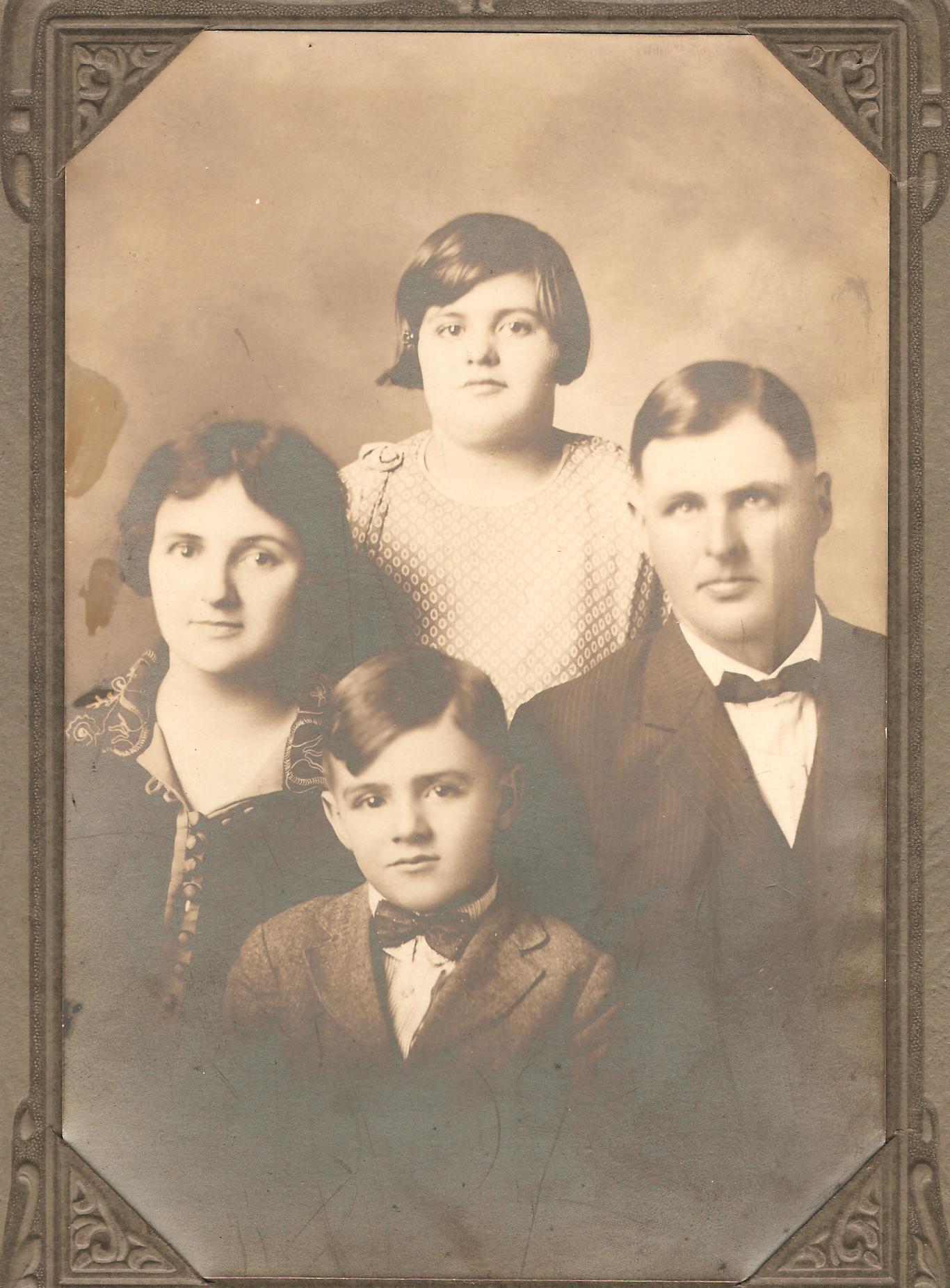
Daily life for Elmer and Edna was not glamorous, but it was steady. They ran a working farm, managed a household, and raised children during years marked by droughts, economic swings, and eventually a world war. The patterns they established—work before play, faith as a foundation, and family loyalty—would echo through later generations.
3. Farmers and Landowners
By the 1930s, Elmer had become a substantial farmer and landowner in his own right. In October 1930, at about 39 years old, he purchased the Robert Saylor farm of 160 acres for $28,000, as noted in the Sabetha Herald.
Around 1932, family recollections say that Elmer bought an 80-acre farm from a man named Hoover, about five miles south of Salem near the Kansas border. This place would simply be known to the family as “The Farm”. It became the central setting for many later Auxier memories, but at its core it was Elmer and Edna’s home base: the place where they worked, raised their children, and hosted relatives. (It would become the farm his son John Nathaniel Auxier and daughter-in-law Theresa Ferne Auxier would work many decades while raising five children.)
Note: The Saylor farm purchase and the Hoover 80-acre purchase may represent separate transactions; both appear in the surviving records and family recollections.
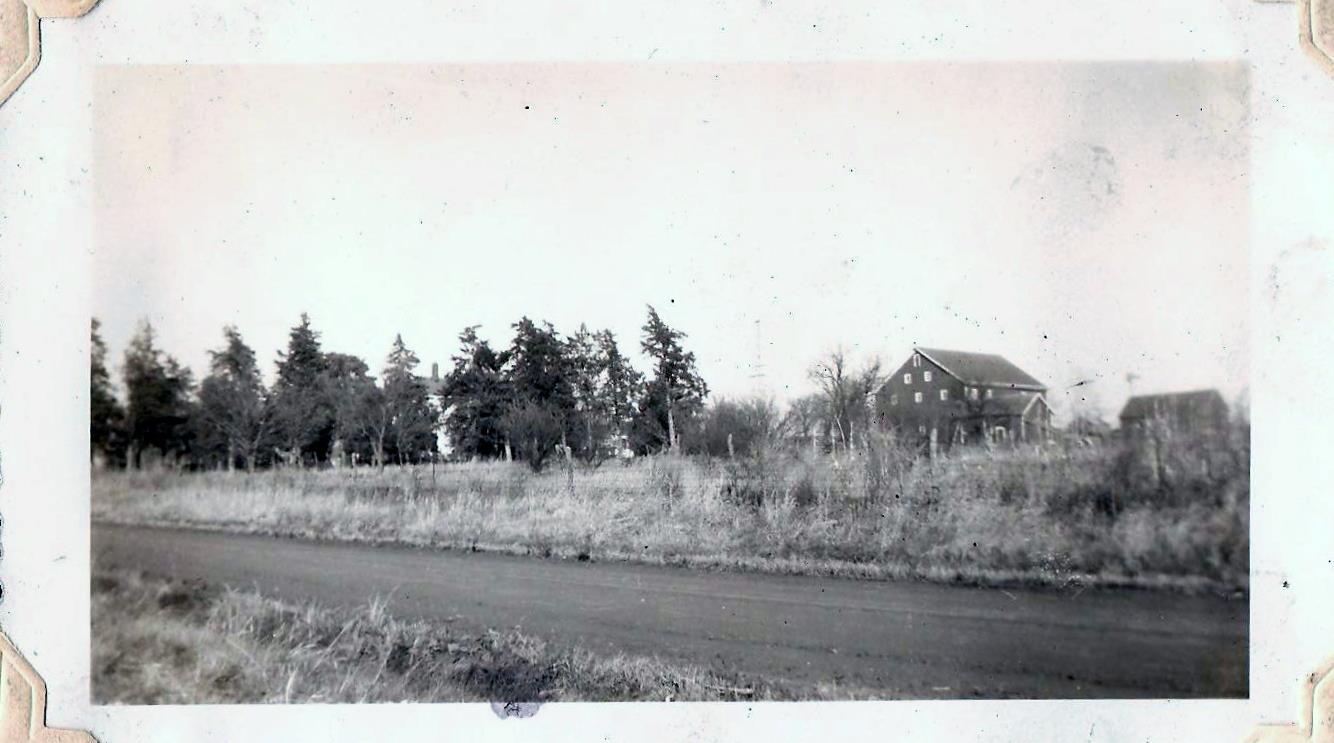
- 1938 - Elmer earned honorable mention accolades in the Pasture-Forage-Livstock Program sponsored by the Nebraska College of Agricultural Ext Service as reported in the 'Osceoloa Record' in Polk, NE
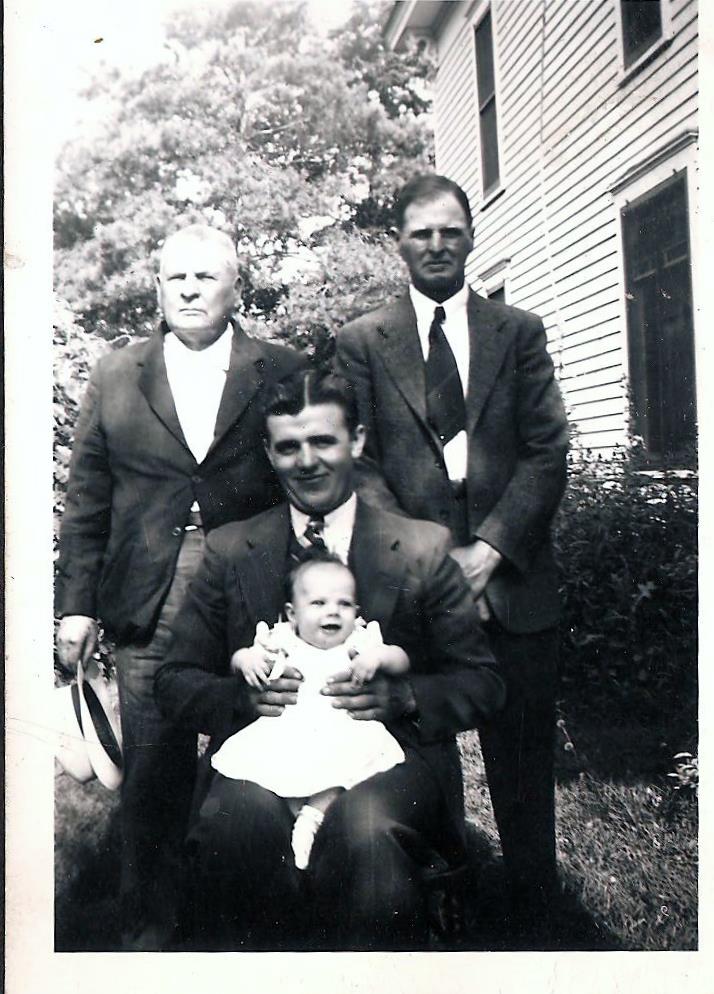
1) Nathaniel Douglas Auxier, 2) Elmer Auxier, 3) John Nathaniel Auxier, 4) Judy Auxier
4. Sabetha Years and Community Life
Elmer and Edna’s story also includes a period in Sabetha, Kansas. While exact dates are not fully pinned down, newspaper items from the early 1940s show them firmly woven into the community there:
- 1941 – Elmer & Edna's first grandchild, Judy, was born of John/Theresa in April
- 1941 – Elmer fell from a hay load and severely injured his hand and arm, a reminder of the physical risks that came with farm work.
- 1941 – Elmer and Edna hosted a Christmas dinner at their Sabetha home, bringing together a large group of relatives and friends from Nebraska and Missouri.
The Christmas gathering is a good snapshot of who Elmer and Edna were: hardworking farmers who made room at their table for extended family, creating warmth and connection across the branches of the family tree.
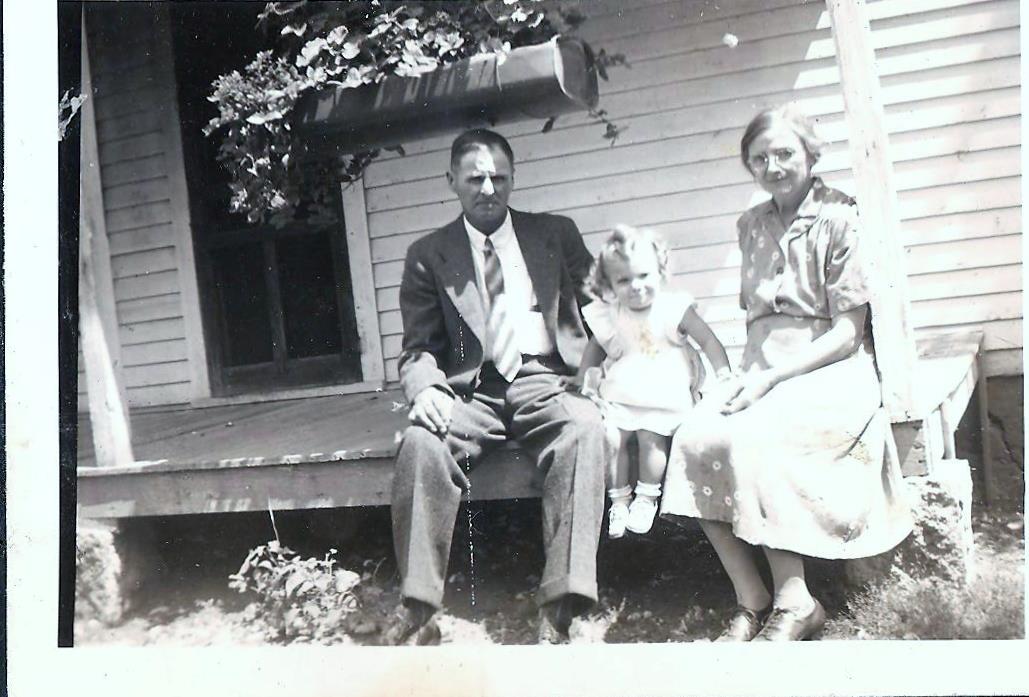
at unknown location (Sabetha home? Falls City?).
5. Life on the Farm: Work, Faith, and Order
On the farm south of Salem, Elmer and Edna created a environment that combined hard work with a strong moral and spiritual framework.
Their grandchildren later remembered summers spent under Elmer’s watchful eye. While the next generation (their son and daughter-in-law) were working—in the fields or at the sheriff’s office—Elmer and Edna kept the grandchildren at the farm.
That single memory captures much about them: Elmer’s seriousness and sense of responsibility, and Edna’s quiet insistence on grounding the children in scripture. Their home was not only a workplace, but also a small training ground, where character and faith were intentionally passed on.
Another detail comes from the everyday rhythm of the farmyard. One of their grandsons remembered seeing Elmer sweeping with a broom or rake as he drove away for school each day. On one occasion, he nearly hit Elmer’s car while pulling out. Even in these small stories, Elmer appears as a steady presence in the background—always working, always there.
6. The Falls City House and Later Years
- 1946 - Elmer and Edna moved to Falls City (per their Golden anniversary newspaper article)
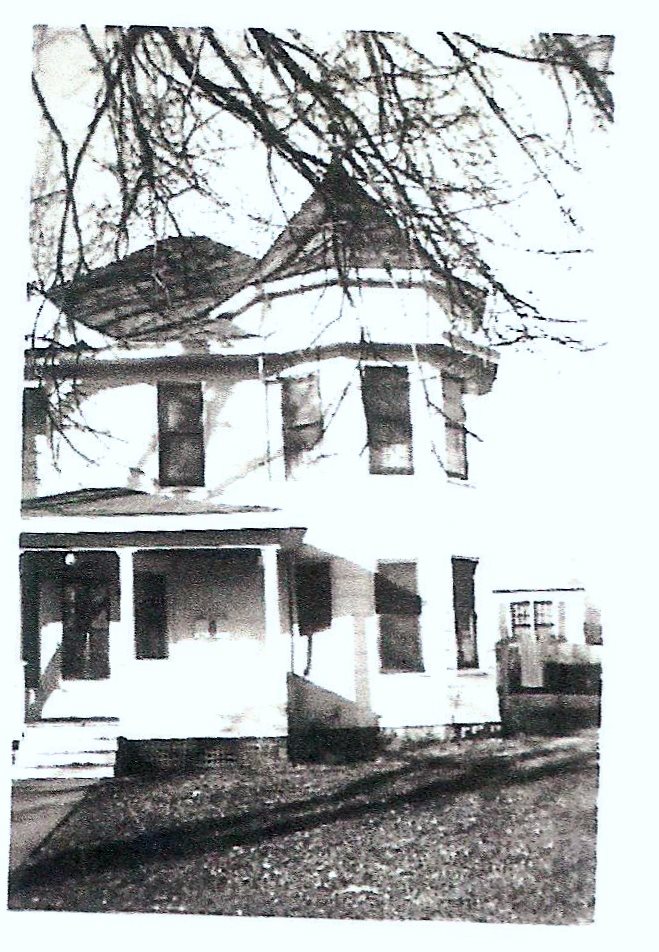
In their later years, Elmer and Edna lived in a distinctive house in Falls City, Nebraska. One grandchild remembers the house as having turrets or a tall cylindrical section, making it stand out in memory.
Inside that house, Elmer made sure his grandchildren felt welcome. Grandson David Mullins recalls an erector set and other toys kept there specifically for the grandkids to play with. It is a small but telling detail: after decades of demanding farm work, Elmer still made a deliberate effort to create space for play and imagination for the younger generation.
There is also a remembered visit to Elmer in a nursing home. One grandson recalls being taken there by his father. Elmer was seated at a dinner table with other residents. When they arrived, his son spoke in a very loud voice to make sure he was heard, introducing the boy as “J.D.’s boy.” Grandfather and grandson shook hands. Even without many words, that moment left a lasting impression.
A similar scene is remembered with Edna in a nursing home. She did not seem to respond outwardly, but her son spoke gently to her and adjusted her pillow. Those quiet acts of care say as much about Elmer and Edna’s legacy as any official record: they raised children who knew how to show respect, tenderness, and faithfulness to aging parents.
7. Character and Legacy
When later generations look back on Elmer and Edna, they do not primarily talk about titles or public honors. Instead, they talk about character:
- Elmer’s steadiness and discipline, visible in his strict but caring supervision of the grandchildren.
- Edna’s commitment to scripture, reading the Bible with the children and grandchildren.
- Their hospitality, opening their home for family gatherings in Sabetha, on the farm south of Salem, and in Falls City.
- The quiet, daily routines—sweeping the farmyard, keeping toys ready for visiting grandchildren, sitting at a nursing-home table—that formed the backdrop of many lives.
Those values did not stop with their children. They filtered down to grandchildren and great-grandchildren who still remember the feel of the farm, the sound of Grandpa Elmer’s voice, the sight of Grandma Edna with a Bible open, and the sense that their lives were part of something steady and rooted.
8. Sources & Notes for This Chapter
This chapter focuses on Elmer Edward and Edna Ester Auxier, using:
- Family recollections from children and grandchildren (including Tom Auxier, John D. Auxier Sr., John (Doug) Auxier Jr., and David Mullins).
- Newspaper items noting Elmer’s land purchases, his injury in 1941, and the Christmas gathering in Sabetha.
- Genealogical notes that place Elmer within the broader Auxier and Griffiths lines.